

WILDLIFE & HABITAT
Seeing the abundant and varied wildlife delights and relaxes all of us. There are a few costs for enjoying the wildlife around us, driving slower to avoid hitting wildlife, protecting domestic animals, and protecting garden plants from wildlife, and taking a few precautions with cars, hikes, and garbage. A team of rangers monitors our wildlife and will answer questions about wildlife. The Bear Valley Springs Wildlife Coalition is a new organization to protect our wildlife.
WILDLIFE
Elk
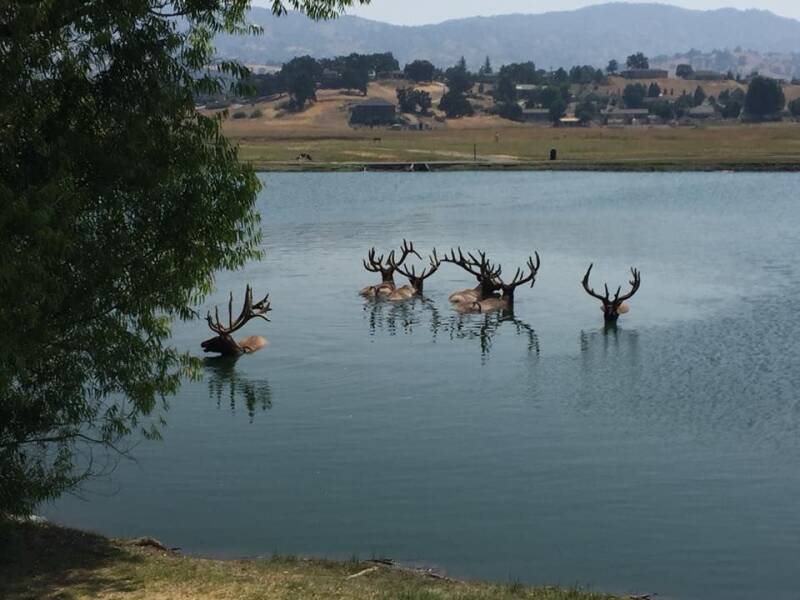
The Elk are truly majestic animal to see. These Rocky Mountain Elk stags are about 5.5 feet at the shoulder, and weigh 700 to 1000 lbs. Most of the stags live on the valley floor, except during the fall when they join the female does in the mountains. The Elk swim in the lake and browse the fairways. Elk crossing the road or browsing next to the road are our most common reason for traffic slowdowns. Unfortunately, Elk and Deer are killed each year by people driving carelessly or too fast. Our Elk history is that many years ago some Elk escaped from Tejon Ranch, and some now live in Bear Valley Spring safe from hunting. Although the Elk seem tame, they are wild and powerful, so approach them cautiously. In the safety of our car, we have often pulled over to watch them from a safe distance.


Deer
There are over 60 different species of deer worldwide. Deer are present on all continents except Antarctica. They can live in a range of habitats, from mountainous areas to warm and wet rainforests. A male deer is called a buck but some larger males are referred to as stags. A Female deer is called a doe or hind. A young deer is called a fawn. Bucks and does can be distinguished from each other by the presence of antlers. Each year, antlers fall off and regrow. As they regrow, they are covered in a furry coat called velvet. The velvet is rich in nerves and blood vessels, allowing the antlers to regrow quickly. During the mating season, or ‘the rut’, bucks will use their antlers to fight over does. The winner is the buck who manages to overpower the other. When most deer are born, they have white spots which disappear as they mature. The spots help fawns to blend into their background, acting as camouflage. A fawn can normally walk within half an hour of being born. Fawns do not have a smell, helping them avoid predators. As deer eyes are on the side of their head, they have 310 degrees’ vision. This is much more than humans, who have 180 degree vision. Deer also has very good night vision which is particularly useful at dawn and dusk when they are most active. Deer can jump up to 10ft high and are very good swimmers.
Cougar
The cougar, also known as the puma, mountain lion, catamount and panther, is a large cat native to the Americas. It is an adaptable, generalist species occurring in most American habitat types. It prefers habitats with dense underbrush and rocky areas for stalking but also lives in open areas. The cougar is largely solitary by nature and considered both nocturnal and crepuscular, although daytime sightings do occur. It is an ambush predator that pursues a wide variety of prey. Primary food sources are ungulates, particularly deer, but it also hunts smaller prey, such as rodents. Cougars are territorial and live at low population densities. Individual home ranges depend on terrain, vegetation and abundance of prey. It is reclusive and mostly avoids people. Fatal attacks on humans are rare but increased in North America as more people entered cougar habitat and built farms.


Black Bears
The American black bear, also known as the black bear is a species of medium-sized bear endemic to North America. It is the continent's smallest and most widely distributed bear species. The American black bear is an omnivore, with its diet varying greatly depending on season and location. It typically lives in largely forested areas, but will leave forests in search of food, and is sometimes attracted to human communities due to the immediate availability of food. Be sure to lock up your food, as they are known to get into cars, garages and even homes.
Snakes
They should not be a problem. Stay on the trails and be alert as where you are walking and stepping around rocks and bushes. BVS has local snake guys to help you remove snakes on your property of our local species, including rattlers, gopher and king snake.


HABITAT



Lakes of Bear Valley Springs
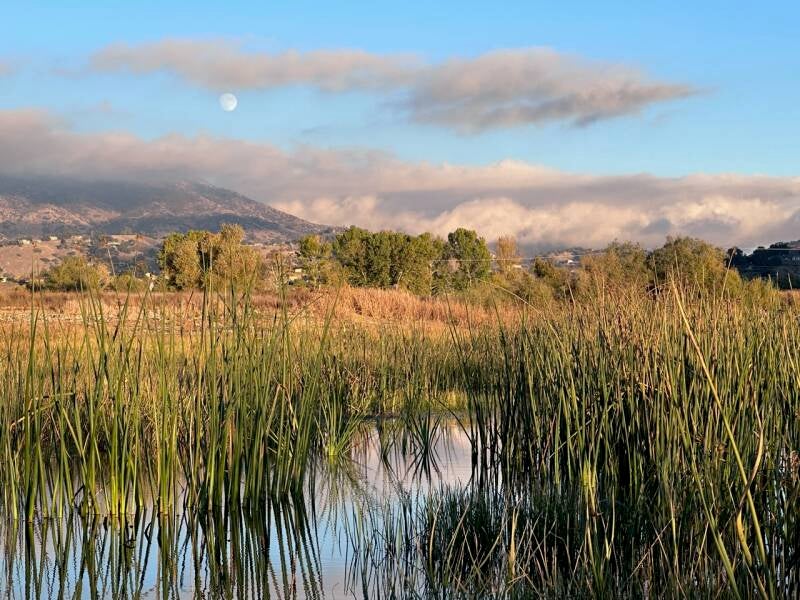
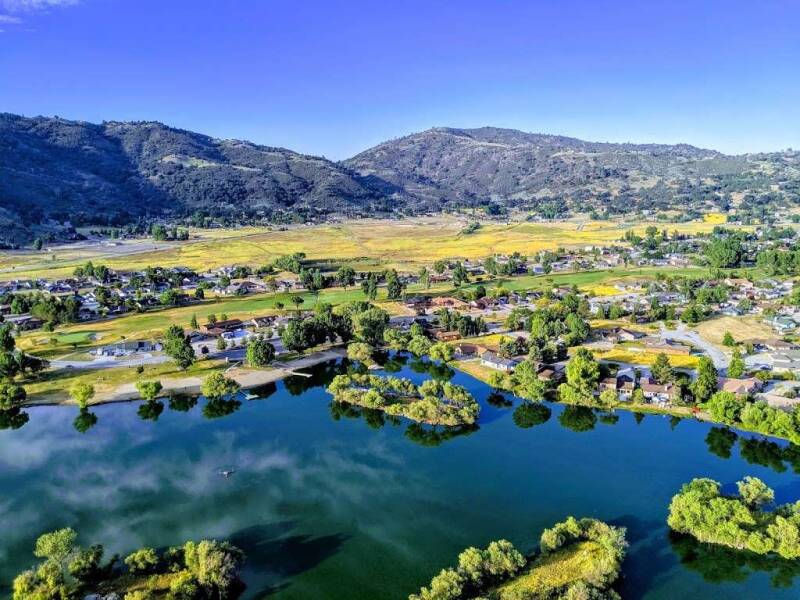
The lakes in Bear Valley Springs form a vital and integral part of the natural ecosystem in our community. Many animals depend upon the lakes for fresh water, particularly in the dry, summer months. In addition to being a habitat for aquatic animals, the lakes provide resting and feeding areas for migratory birds. In addition, a plethora of species nest and raise their young in the surrounding vegetation, such as the cattails. The islands in the Cub and 4-Island Lakes provide further opportunities for nesting birds to raise their young each year.
Cub Lake is a 9.75 acre lake that is centrally located off Bear Valley Road. BVS road forms a dam that impounds the water in this man made lake. Cub Lake is currently filled by surface stream runoff with supplemental groundwater that is provided by pumping from nearby wells and pumping water out of Jack’s Hole during times that the lake level is low. The level of the lake is maintained above a minimum level to satisfy aesthetic and recreational fishing uses of the lake in addition to providing a reservoir for irrigation. It offers picturesque picnic areas, walking paths, an outdoor basketball court, playground area, a dog park and bathrooms.
Jack’s Hole is located between Cub Lake and Four Island Lake. It sits in a topographic depression and floodplain area. It is a controlled drainage hole that stores surface runoff and is drained each spring/summer to fill the other two lakes which irrigate the golf course. It is estimated to have the capacity of approximately 40 acre feet of water. It offers picturesque views as it sits along the Nature path. Because there is little human activity there, it offers the best opportunities for birding, and 57 species of birds have been tallied at Jack’s Hole.
4-Island Lake is a 37.5 acre lake located along the Oak Tree Golf Course. Water in this lake is used for golf course irrigation and recreation. The lake is filled from surface stream runoff and releases from Cub Lake and the Jamaica Dunes Basin. The lake is stocked for fishing enthusiasts. It’s also popular for swimming and boating. This recreation area has launch ramps, fishing docks, volleyball court, playground, and picnic area. The islands are considered a bird sanctuary and are closed January 1st-May 23rd. The California department of Fish and Wildlife period of protection of nesting birds is February 15th through August 31st.
Surprise Lake is a seasonal lake that ponds up behind the bedrock ridge transecting the middle valley, thereby separating the middle valley from the lower valley. The lake forms during years of high rainfall and runoff and is uncontrolled with respect to the lake boundaries and water depth. The water somewhat controls the lake level of Cub Lake and surplus flows out of Cub Lake.
Why Lakes are Important
More than 90% of California’s wetlands have been drained or destroyed. The number of birds in North America have dropped by one-third over the past fifty years, likely due in large part to loss of suitable habitat. California's Central Valley is one of the most important regions in western North America to migratory and wintering waterbirds. Lakes and wetlands are very important due to our position on the Pacific Flyway and the paucity of lakes in our area for birds to feed, rest and reproduce. More than one third of North American bird species use wetlands for breeding, nesting, shelter and rearing their chicks, while more than 80% of U.S. threatened and endangered bird species rely on wetlands.
A Vital Link Between Land and Water
Wetlands are, in fact, valuable natural resources. Whether drier or wetter, bigger or smaller, wetlands provide important benefits to people and the environment. Wetlands help regulate water levels within watersheds; improve water quality; reduce flood and storm damages; provide important fish and wildlife habitat and support fishing and other recreational activities. Wetlands are natural wonderlands of great value.
Many wetlands are seasonal (they are dry one or more seasons every year) and particularly in the arid and semiarid West, may be wet only periodically. The quantity of water and the timing of its presence in part determine the functions of a wetland and its role in the environment.
Even wetlands that appear dry for a few months - such as vernal pools - often provide critical habitat for wildlife. Many species of birds rely on wetlands for food, water, and shelter, especially during migration and breeding.
Pictures Credit: Roger Hall & Fred Bittner
Sources:
Evaluation of Potential Surface Water Impoundment
Projects for Bear Valley Springs
Fugro West, Inc.
EPA
BVSA
Lake Quality Advisory Committee
